Home > Decor & Accessories > Mirrors
Mirrors
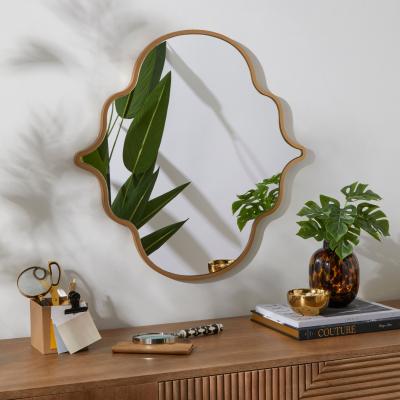
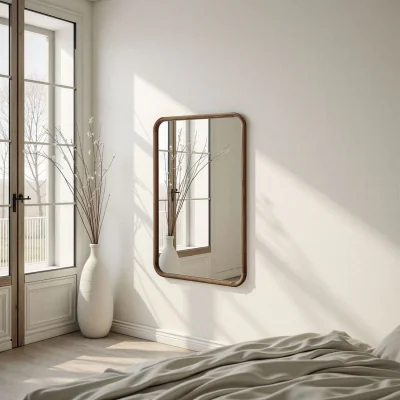
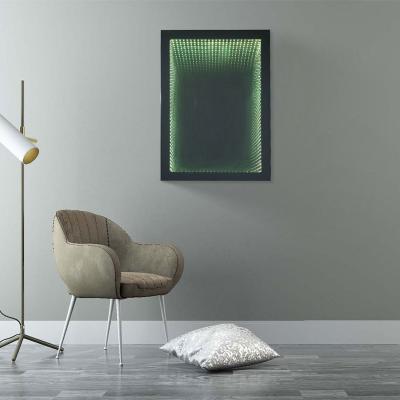
A mirror is one of the rare interior choices that changes a room rather than just decorating it. Placed opposite a window it doubles the daylight, and used above a sofa or sideboard it balances the visual weight of the furniture below. In a hallway it makes a narrow space feel twice the size. These are practical effects more than decorative ones, which is why a well-placed mirror tends to do more work than its price suggests.
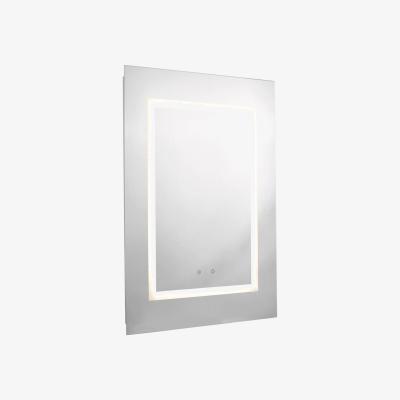
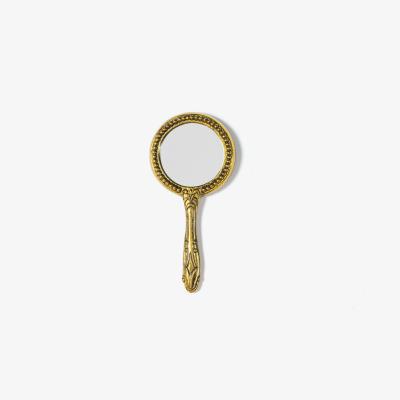
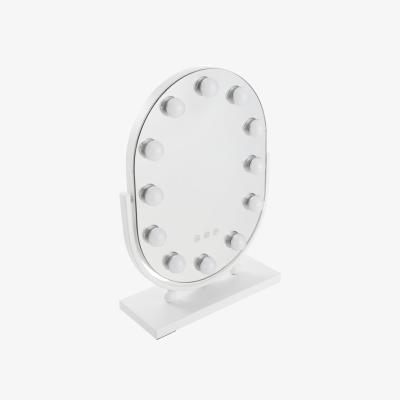
Wall mirrors run from small accent pieces through to large statement designs that take up an entire wall. Floor-standing mirrors come in two formats: cheval designs sit on their own frame and tilt on a swivel mechanism, while leaners simply rest against the wall. Both tend to be taller than wall-hung pieces and far easier to reposition, which makes them a natural choice for a full-length view in a bedroom corner. Table mirrors often have a tilting frame and sit easily on a dressing table, shelf or sideboard. Hollywood and vanity mirrors push this further, with LED bulbs around the glass giving even, shadow-free light for makeup and grooming.
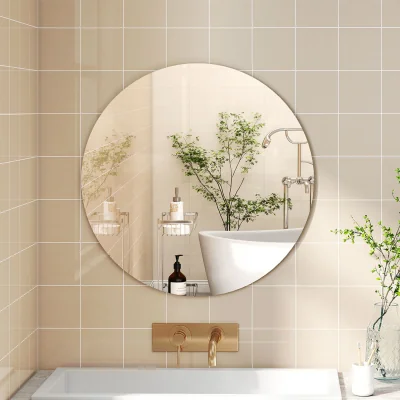
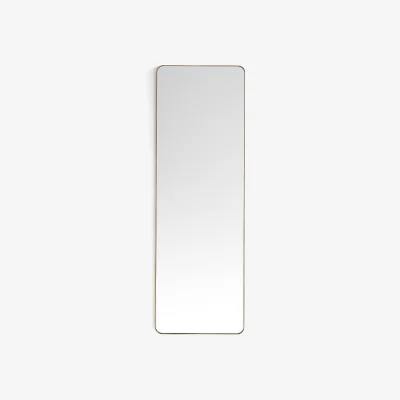
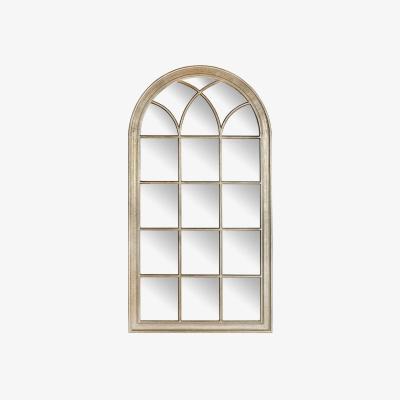
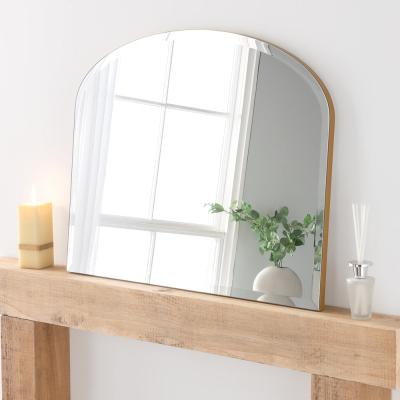
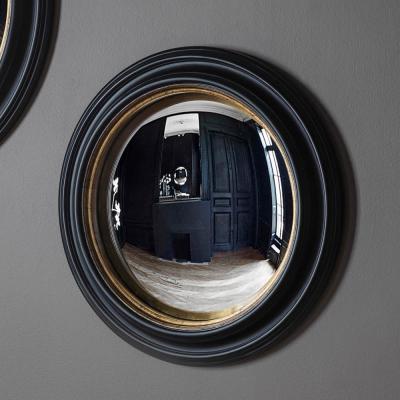
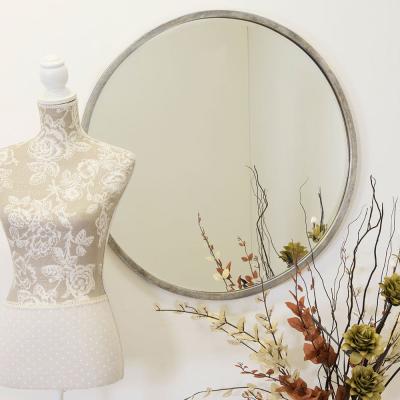
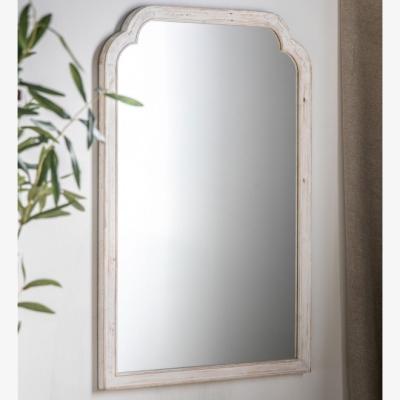
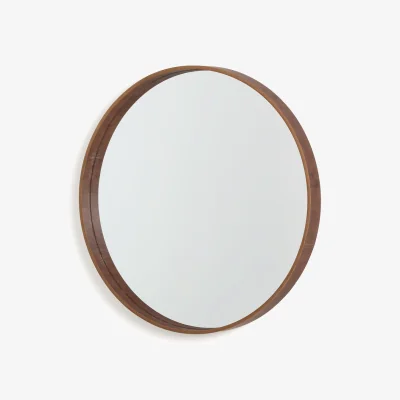
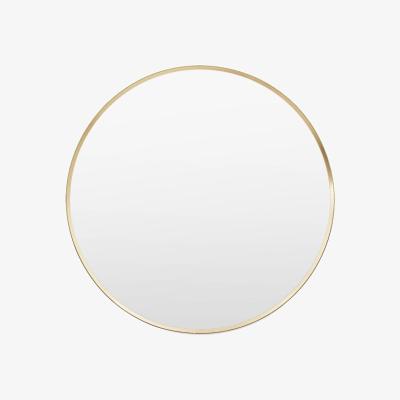
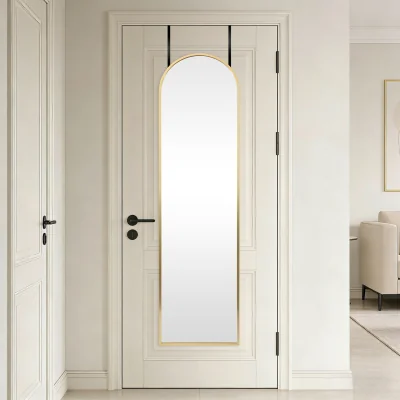
Round mirrors are particularly effective in angular rooms, where the curve of the mirror softens the straight lines of walls and furniture. Arch and dome shapes have surged in popularity for the same reason, lending rooms an almost architectural quality. In hallways, a tall narrow design adds light and depth without competing with artwork; at the opposite scale, an oversized piece can become the most dominant single element in a living room or bedroom.
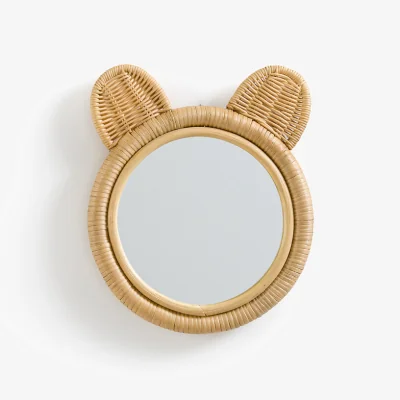
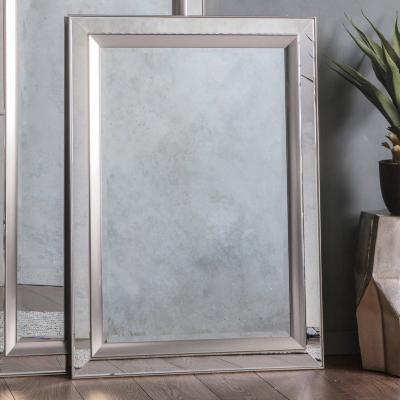
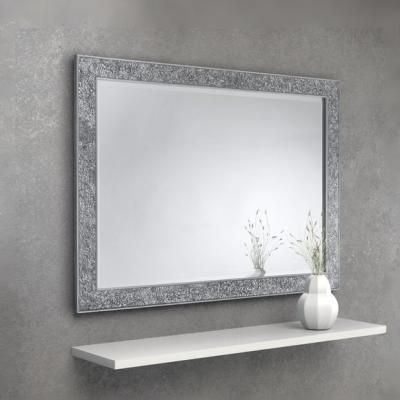
Natural wood and rattan suit traditional and relaxed interiors, whereas black metal and matte finishes go better with contemporary spaces. Gold, brass and antique brass lend warmth wherever they are used. Frameless and bevelled-edge designs (the latter with an angled cut around the glass that catches light) step back entirely, which is useful where the mirror is chosen for what it reflects rather than what it looks like. Designer luxury mirrors sit at the premium end, with frames that are as much the point as the glass.
Paired with artwork and a well-placed wall light, a mirror gives a room real warmth in the evening as light bounces around surfaces. Set within a wider arrangement of candles and vases on a mantel, it adds depth to the whole display.
Flitch lets you compare mirrors from more than 100 UK retailers in one place, with filters covering type, frame material, colour and price. For a helping hand on positioning or finding the right shape for a specific spot, our expert stylists are on hand.
How high should a mirror be hung?
The centre of the mirror should sit roughly 145 to 150cm from the floor, which aligns with average eye level. Above a console or sideboard, leave around 15 to 25cm of breathing space between the top of the furniture and the bottom of the frame.
Can a mirror make a small room look bigger?
Yes. Placing a mirror opposite a window reflects daylight back into the room and visually doubles the space. Large mirrors on narrow walls give the most dramatic effect, while clusters of smaller mirrors can break up a long wall into multiple light-reflecting surfaces.
What is the difference between a wall mirror and a leaner mirror?
Wall mirrors hang flat on the wall using fixings on the back, taking up no floor space. Leaner or floor-standing mirrors rest against the wall on a wide base, usually with anti-tip straps, and are typically taller and easier to reposition.
Are Hollywood vanity mirrors worth the cost?
Hollywood-style mirrors with LED bulbs around the frame give even, shadow-free light ideal for makeup, shaving and grooming. They cost more than plain table mirrors but the LED strips run for tens of thousands of hours and most include dimmable settings.
How do I hang a heavy mirror safely?
Use the fixings appropriate for the wall type. Plasterboard needs proper anchors rated for the mirror's weight, while solid walls take screws and rawl plugs. For mirrors over 5kg, two fixings spread across the back distribute the load.
How do I clean a mirror without leaving streaks?
A microfibre cloth with a small amount of glass cleaner or a vinegar-and-water solution works better than paper towels, which leave lint. Wipe in one direction rather than circular motions, and buff with a dry cloth to finish.
Browse By...
Retailer
Amara MirrorsAnd So To Bed MirrorsAndrew Martin MirrorsAnthropologie MirrorsArighi Bianchi MirrorsAtkin & Thyme MirrorsBarker and Stonehouse MirrorsCasa by JJ MirrorsCox and Cox MirrorsCuckooland MirrorsCult Furniture MirrorsDanetti MirrorsDibor MirrorsDowntown MirrorsDunelm MirrorsFeather & Black MirrorsFrench Bedroom MirrorsFurniture Village MirrorsFurniture123 MirrorsGraham & Green MirrorsHabitat MirrorsHappy Beds MirrorsHeal's MirrorsHomebase MirrorsIndustville MirrorsIO Living MirrorsJohn Lewis MirrorsKave Home MirrorsLa Redoute MirrorsLoaf MirrorsMade in Design MirrorsMarks & Spencer MirrorsMy Furniture MirrorsNkuku MirrorsNordic Nest MirrorsOak&More MirrorsOAT Home MirrorsOKA MirrorsOliver Bonas MirrorsOlivia's MirrorsPagazzi MirrorsPerch and Parrow MirrorsQuatropi MirrorsRockett St George MirrorsRose & Grey MirrorsSazy MirrorsSofa.com MirrorsSoho Home MirrorsTeddy Beau MirrorsThe Conran Shop MirrorsThe Range MirrorsThe Rug Seller MirrorsTobias Oliver MirrorsUrban Outfitters MirrorsWestwing MirrorsWolf & Badger MirrorsWoods Furniture Mirrors
Colour
Material
Sale
Amara MirrorsGraham & Green MirrorsOliver Bonas MirrorsAnd So To Bed MirrorsHabitat MirrorsOlivia's MirrorsAndrew Martin MirrorsHappy Beds MirrorsPagazzi MirrorsAnthropologie MirrorsHeal's MirrorsPerch and Parrow MirrorsArighi Bianchi MirrorsHomebase MirrorsQuatropi MirrorsAtkin & Thyme MirrorsIndustville MirrorsRockett St George MirrorsBarker and Stonehouse MirrorsIO Living MirrorsRose & Grey MirrorsCasa by JJ MirrorsJohn Lewis MirrorsSazy MirrorsCox and Cox MirrorsKave Home MirrorsSofa.com MirrorsCuckooland MirrorsLa Redoute MirrorsSoho Home MirrorsCult Furniture MirrorsLoaf MirrorsTeddy Beau MirrorsDanetti MirrorsMade in Design MirrorsThe Conran Shop MirrorsDibor MirrorsMarks & Spencer MirrorsThe Range MirrorsDowntown MirrorsMy Furniture MirrorsThe Rug Seller MirrorsDunelm MirrorsNkuku MirrorsTobias Oliver MirrorsFeather & Black MirrorsNordic Nest MirrorsUrban Outfitters MirrorsFrench Bedroom MirrorsOak&More MirrorsWestwing MirrorsFurniture Village MirrorsOAT Home MirrorsWolf & Badger MirrorsFurniture123 MirrorsOKA MirrorsWoods Furniture Mirrors
Beige MirrorsGrey MirrorsTeal MirrorsBlack MirrorsOrange MirrorsWhite MirrorsBlue MirrorsPink MirrorsYellow MirrorsBrown MirrorsPurple MirrorsGreen MirrorsRed Mirrors
Home essentials at unbeatable prices

Sponsored