Headboards
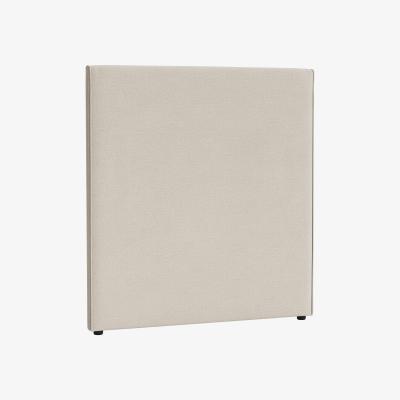
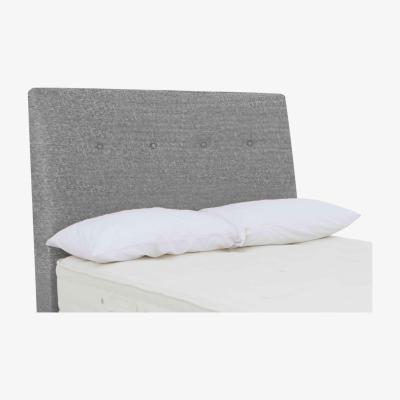
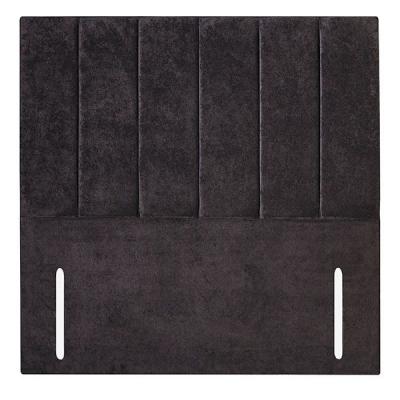
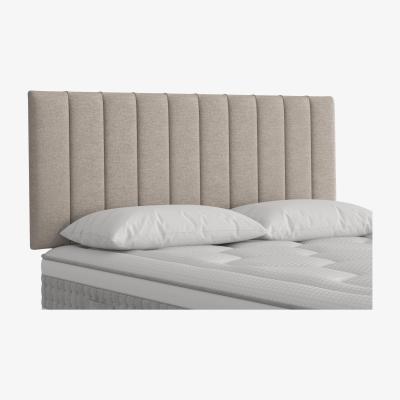
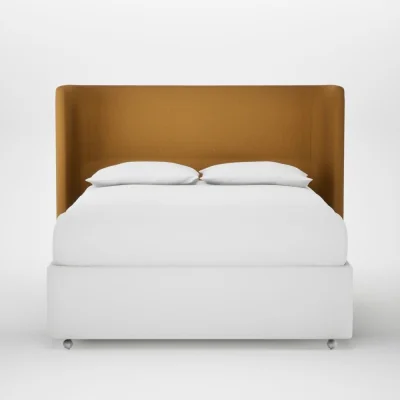
A bed without a headboard tends to look like it's waiting for something. The headboard is usually the visual anchor of a bedroom, and a well-chosen one can do a surprising amount of work: a plain frame and neutral bedding will take on an entirely different character depending on whether you pair them with a tall buttoned panel, a low slatted wooden bar, a winged upholstered curve, or a full-width wall-mounted piece that runs almost to the ceiling.
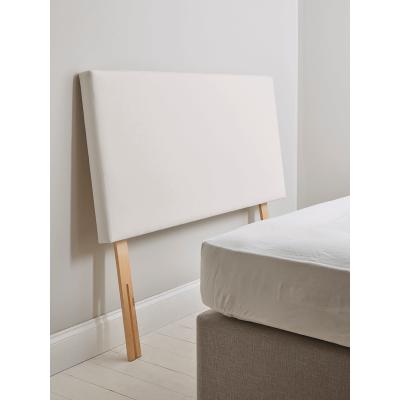
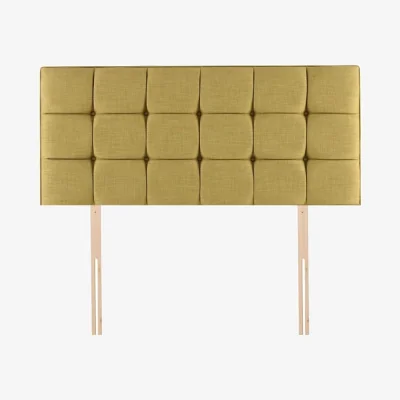
Headboards attach in three main ways, and the choice depends on the bed beneath. Strut-fixing headboards bolt onto the back of a divan base using standard fittings and sit just above the mattress. Floor-standing headboards extend down to the floor behind the bed, hiding any gap and giving a more substantial look than strut designs. Wall-mounted headboards screw directly into the wall, which is useful with platform beds and low-profile divans where you want a taller back, or where the bed sits slightly away from the wall. Most divan owners need a strut or floor-standing model; bed-frame owners without an integral headboard usually go wall-mounted or floor-standing.
Headboards tend to have the same width as beds: single (3ft), small double (4ft), double (4ft 6in), king (5ft) and super-king (6ft) widths are standard. However there is far more variation when it comes to headboard height. Low panel headboards around 60cm suit compact bedrooms and rooms with sloping eaves, whilst anything above 90cm gives genuine back support for reading or watching television in bed and carries more presence in a larger room. Tall and oversized headboards running to 120cm or more make a statement piece in their own right in rooms with the ceiling height to carry them.
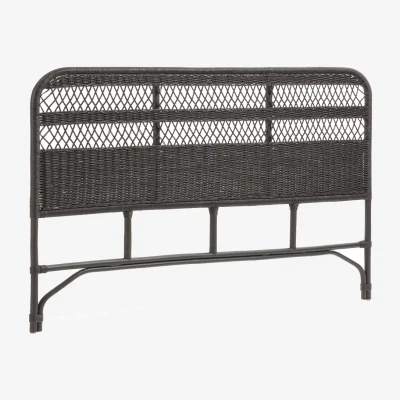
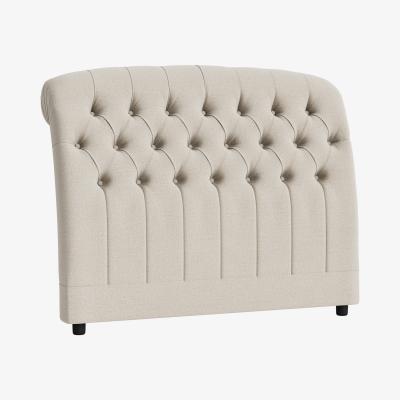
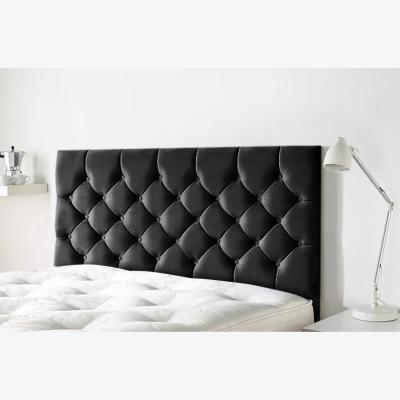
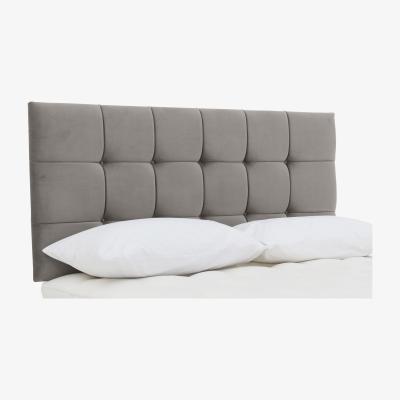
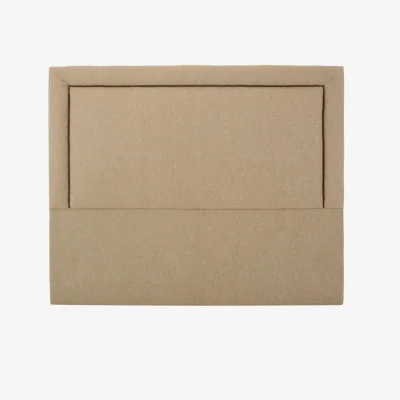
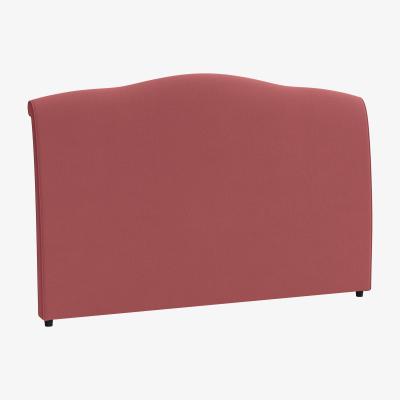
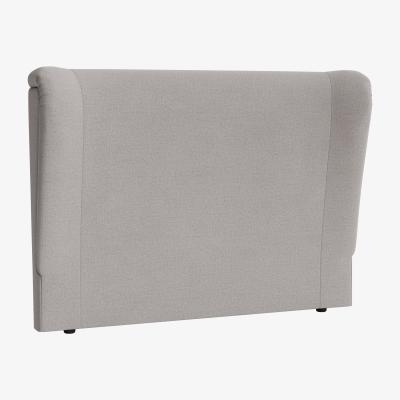
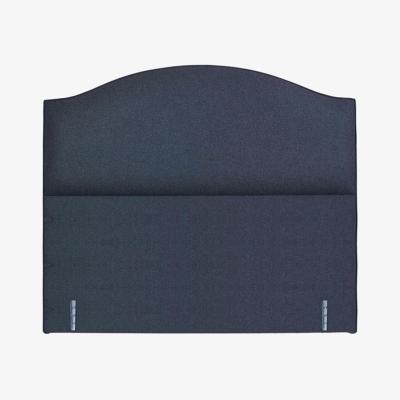
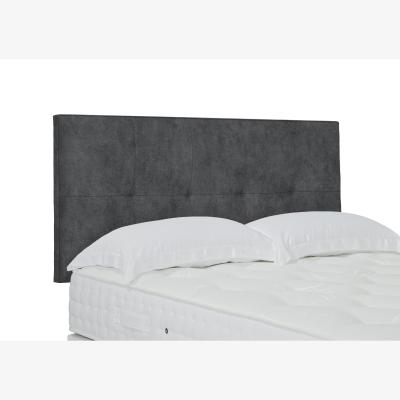
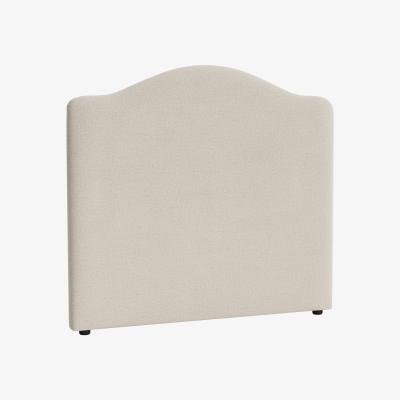
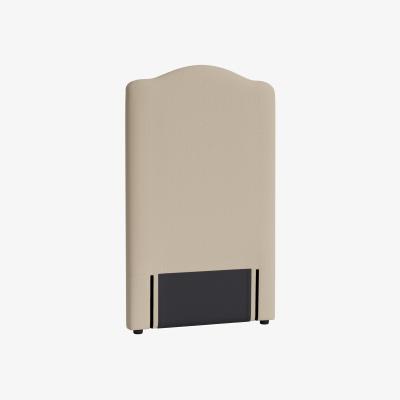
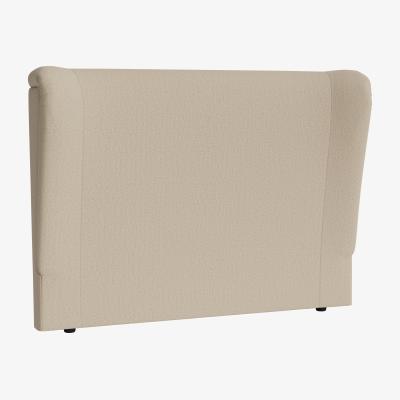
Upholstered headboards dominate for good reason: fabric, velvet, linen, boucle and leather give you far more control over texture and softness than any other material. Within that world, shape matters as much as covering. Panel headboards keep a flat, clean front, often with stitched channels running vertically or horizontally through the fabric. Winged designs extend forward on either side to enclose the head of the bed, a more embracing silhouette that works well in larger rooms. Buttoned and Chesterfield styles add tufted depth, while arched and scalloped shapes go the other way, softening the top edge rather than embellishing it. Away from upholstered options, wooden and rattan headboards bring natural texture with a Japandi or coastal lean, while metal headboards in brass, iron or steel go sharper and cooler, suiting period or industrial rooms.
Flitch gathers headboards from more than 100 UK retailers in one searchable catalogue. Use our filters to narrow your choice, and browse the price history of thousands of items to know when a price is fair. Our expert stylists are on hand for anything that needs a more considered approach.
How do I know what size headboard I need?
Match the headboard width to the bed; for example a 4ft 6in double bed needs a 4ft 6in headboard. Height comes down to personal preference, although anything above 90cm works well for sitting up to read or watch television in bed.
Can I use any headboard with a divan bed?
Most strut-fixing and floor-standing headboards fit standard divan bases. Check the strut spacing before ordering. Frame-style headboards designed to bolt into a wooden or metal bed frame will not usually fit a divan.
What is the difference between wall-mounted and floor-standing headboards?
Floor-standing headboards have legs extending behind or under the bed to the floor, whilst wall-mounted headboards screw into the wall and do not touch the base. Wall-mounted gives a cleaner look but requires solid fixings; floor-standing is simpler to fit and move.
Are upholstered headboards practical?
Yes. Fabric and velvet pick up oils and dust over time, but sometimes have wipe-clean or removable covers. Good upholstery should last ten years or more with light vacuuming and occasional spot cleaning.
How tall should a headboard be?
For sitting up in bed, look for at least 90cm above the mattress. In tall-ceilinged rooms, oversized headboards from 120cm upwards add presence. In low-ceilinged rooms, keep it under 100cm so that the proportions work.
Browse By...
Retailer
Amara HeadboardsAnd So To Bed HeadboardsAndrew Martin HeadboardsAnthropologie HeadboardsArighi Bianchi HeadboardsBarker and Stonehouse HeadboardsCox and Cox HeadboardsCuckooland HeadboardsDowntown HeadboardsDreams HeadboardsDunelm HeadboardsFeather & Black HeadboardsFurniture Village HeadboardsFurniture123 HeadboardsHabitat HeadboardsHeal's HeadboardsJohn Lewis HeadboardsKave Home HeadboardsLa Redoute HeadboardsLoaf HeadboardsMade in Design HeadboardsMarks & Spencer HeadboardsMy Furniture HeadboardsNkuku HeadboardsOak&More HeadboardsOKA HeadboardsOlivia's HeadboardsPerch and Parrow HeadboardsRockett St George HeadboardsSofa.com HeadboardsTeddy Beau HeadboardsThe Range HeadboardsUrban Outfitters HeadboardsWestwing HeadboardsWoods Furniture Headboards
Colour
Material
Amara HeadboardsFurniture Village HeadboardsOak&More HeadboardsAnd So To Bed HeadboardsFurniture123 HeadboardsOKA HeadboardsAndrew Martin HeadboardsHabitat HeadboardsOlivia's HeadboardsAnthropologie HeadboardsHeal's HeadboardsPerch and Parrow HeadboardsArighi Bianchi HeadboardsJohn Lewis HeadboardsRockett St George HeadboardsBarker and Stonehouse HeadboardsKave Home HeadboardsSofa.com HeadboardsCox and Cox HeadboardsLa Redoute HeadboardsTeddy Beau HeadboardsCuckooland HeadboardsLoaf HeadboardsThe Range HeadboardsDowntown HeadboardsMade in Design HeadboardsUrban Outfitters HeadboardsDreams HeadboardsMarks & Spencer HeadboardsWestwing HeadboardsDunelm HeadboardsMy Furniture HeadboardsWoods Furniture HeadboardsFeather & Black HeadboardsNkuku Headboards
Beige HeadboardsGrey HeadboardsTeal HeadboardsBlack HeadboardsOrange HeadboardsWhite HeadboardsBlue HeadboardsPink HeadboardsYellow HeadboardsBrown HeadboardsPurple HeadboardsGreen HeadboardsRed Headboards
Home essentials at unbeatable prices

Sponsored