Wolf & Badger
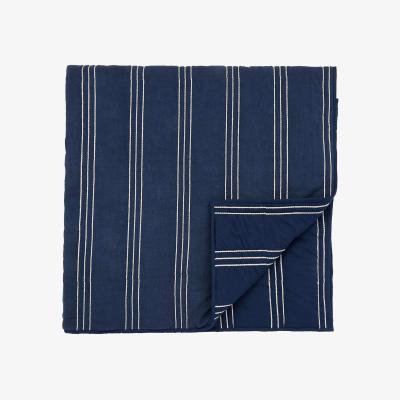
Blue / White Indigo Cloth Throw - Twenty One Four | One Size | Botanical Boys
£185
Price History
Unfortunately we don’t have pricing data
for this time period;
please select another time period
Description
The indigo colour is obtained from plant sources (Indigofera plant and the indigo vine). The dried balls of crushed leaves are left to ferment before its mixed with an alkaline solution to produce the dye. The cloth is repeatedly immersed into the dye to darken the colour. Afterwards the textile is hand beaten to fasten the colour. Possibly the most recognizable form of indigo cloth from West Africa, this adire oniko textile was made by tying the cotton textile tightly in order to resist the dye in certain parts. The patterns are unmistakable and are attributed to the Yoruba of Nigeria. Hand Wash (Preferred): Gently hand wash in cold or lukewarm water using a mild detergent or bar soap. Machine Wash: Use a cold, delicate cycle (or lower) and wash the throw separately or with similar colors to prevent color bleeding. Avoid Harsh Chemicals: Never use bleach, as it will damage the cotton and cause colors to fade. Do Not Wring: Avoid twisting or rubbing the fabric, as this can distort the shape and damage the dyes. Indigo Specifics: If your throw is hand-dyed indigo, it is normal for excess dye to bleed. Wash it in cold water repeatedly until the water runs clear. Cotton 90%
Dimensions
Dimensions can be found on Wolf & Badger's website here
About Wolf & Badger
Global Reach and Ethical Focus
Since its inception with a boutique in Notting Hill, Wolf & Badger has expanded to a significant online presence and flagship stores in London's King's Cross, New York, and Los Angeles. This growth mirrors their vision of building a community of ethical brands and conscious consumers.
Award-Winning Sustainable Practices
In 2021, Wolf & Badger's efforts in sustainable retailing were recognized with awards like Drapers Sustainable Retailer of the Year and Marie Claire's Best Ethical Retailer. Their commitment to making business a force for good is further solidified by becoming the first B Corp certified marketplace in the UK.